


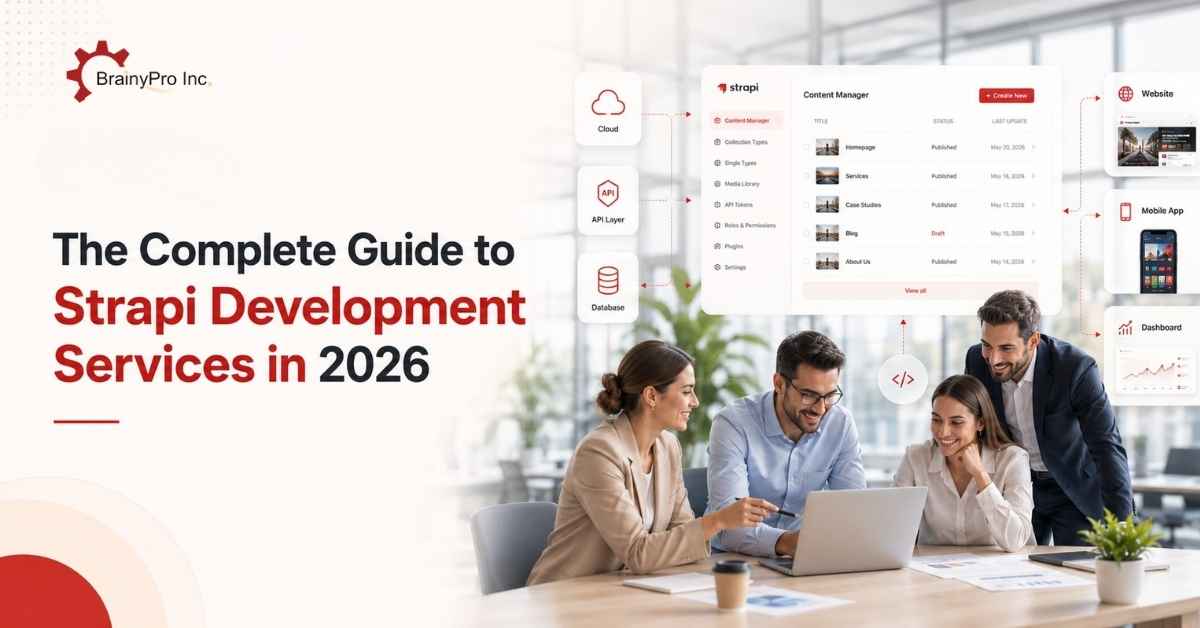
In 2026, enterprises face increasing challenges in managing digital presence while ensuring content consistency across multiple platforms. Strapi development services offer a modern approach for companies aiming to streamline content workflows and scale effectively.
Content management with Strapi allows organizations to create, edit, and deliver content efficiently while maintaining governance, compliance, and security. Teams can create content across multiple platforms without technical bottlenecks. Enterprises relying on Strapi gain a robust system that adapts to evolving business requirements.
Most organizations struggle with managing content across multiple channels like websites, mobile apps, and digital kiosks. Strapi CMS development is a solution to this. Flexible content management supports multi-channel distribution. Its headless CMS solutions enable teams to deliver content reliably while maintaining high-performance standards.
Enterprises can also use Strapi to implement headless CMS platforms, separating the frontend from the backend. This separation allows developers to build applications in Next.js or other frameworks while content teams focus on content operations. Strapi projects make it easy to integrate third-party systems and extend functionality through custom plugins.
With Strapi, companies can build modern web applications that provide unmatched flexibility. By adopting structured processes, teams achieve efficient development, reducing project delays and improving time-to-market.
This guide provides a comprehensive understanding of Strapi’s capabilities and strategic advantages.
What is Strapi and How It Works
Strapi is a headless content management system that decouples content storage from presentation. Strapi headless CMS enables enterprises to develop custom features and ensure consistent content delivery. Its backend architecture is built on Node.js, allowing scalability and high performance. You can maintain full control over your data while leveraging RESTful and GraphQL APIs for multi-platform content delivery.
In practical terms, this separation allows developers to work independently of designers and content creators. The system stores structured content in a way that can be accessed at any time, reducing bottlenecks during development. Teams can also prepare content in advance and schedule updates, ensuring that information reaches end users on time. Because content is stored centrally, multiple departments can collaborate without duplicating efforts.
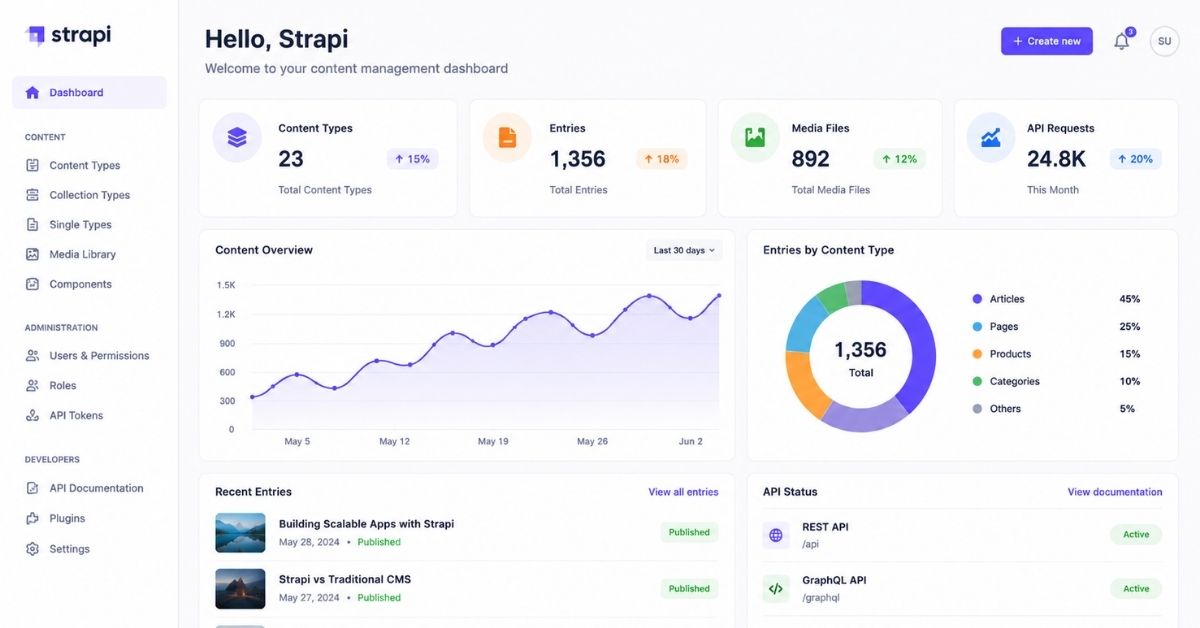
Developers can build applications using a flexible API-first architecture. The admin panel provides permission management, content approvals, and role-based access control. Enterprises can migrate from existing CMS solutions or deploy, whether you’re building a new CMS from scratch. Its ecosystem supports integrations, plugins, and extensions that are highly customizable and extensible.
This approach also improves the consistency of content across platforms. Users accessing content from different devices receive the same information, reducing confusion and enhancing the user experience. With clear separation, updates to the presentation layer do not affect the content structure, making maintenance simpler and less error-prone. Additionally, teams can experiment with new front-end designs or layouts without disrupting the server-side operations.
Key Features
Strapi includes several built-in features that simplify enterprise content management. It allows teams to assign tasks, set deadlines, and track progress. With flexible content management solutions, teams can tailor the platform to meet unique business needs. Plugin development enables the addition of custom capabilities. Headless Strapi ensures content delivery across multiple channels without dependencies on presentation layers.
The system also supports version control for content. It allows users to revert changes if needed. This adds an extra layer of security and reduces the risk of data loss. Notifications and alerts can keep teams informed about content updates, ensuring timely action. Moreover, Strapi provides audit logs and reporting tools that help administrators monitor activity and maintain compliance with internal policies or external regulations.
Strapi distributes content across multiple channels, supporting multi-channel content distribution. Its API integration allows seamless communication between applications via REST or GraphQL. Enterprises can manage complex CMS projects, ensuring content flows consistently across websites, apps, and other digital touchpoints. The platform’s modular design allows incremental improvements, meaning updates or new features can be added without major overhauls. It also encourages collaboration between teams, as responsibilities can be divided clearly.
How Strapi Development Services Benefit Enterprises
Custom development services for Strapi are designed to meet business needs. Its custom CMS capabilities allow teams to build custom solutions aligned with operational objectives. Headless CMS development ensures content is structured, flexible, and accessible across all platforms.
Enterprises benefit from more efficient internal communication because all teams can access the same central system. Content creators, developers, and managers can coordinate tasks without duplicating efforts or causing inconsistencies. This centralized approach also allows organizations to track progress, measure performance, and make data-driven decisions that improve operational efficiency.
A professional Strapi development company or development agency can help enterprises hire Strapi developers, optimize CMS capabilities, and execute CMS projects effectively. A well-structured development process ensures that every Strapi project progresses efficiently, from planning and design to deployment and ongoing support. Strapi supports self-hosted headless CMS setups or cloud deployments, giving you full control over your data while maintaining secure applications. Projects can be completed on time, preserving deadlines and operational priorities.
In addition, enterprises can benefit from long-term scalability. As businesses grow, the platform can accommodate increasing content volume without slowing down operations. Teams can introduce new applications and expand channels, avoiding disruptions to daily activities. Having a system that adapts over time reduces the need for costly migrations or overhauls.
By partnering with a Strapi CMS development company, you can receive expert guidance for solutions using Strapi, including headless CMS platforms and tailored solutions. Collaborating with an experienced development team can make implementation a pleasure to work on while ensuring projects are scalable and secure. These partnerships also provide opportunities for training internal staff, improving adoption rates, and creating a culture of continuous improvement. Expert guidance can help you leverage best practices, avoid common pitfalls, and maintain a high level of quality across projects.
Furthermore, enterprises can benefit from enhanced oversight and governance. Clear role-based access and audit trails allow managers to monitor operations, ensure accountability, and maintain compliance with internal policies or external regulations. This structure minimizes risk and supports organizational objectives while providing flexibility for teams to experiment and innovate safely.
By implementing a modern platform with a structured approach, enterprises can streamline operations, reduce operational overhead, and achieve consistent outcomes across multiple projects. Teams can focus on delivering value rather than troubleshooting inconsistencies, making day-to-day work more productive and satisfying.
Multi-Platform Delivery & API Integration
Strapi projects allow organizations to deliver content across multiple channels seamlessly. Teams can manage flexible content that adapts to diverse platforms while maintaining branding consistency. REST API and RESTful and GraphQL APIs support multi-platform content delivery, enabling integration with external systems, including e-commerce, analytics, and CRM tools.
This capability allows enterprises to provide a consistent experience across websites, mobile apps, kiosks, and other digital platforms. Content can be updated in one central location and automatically reflected everywhere, reducing the need for manual updates. Teams can also experiment with new presentation layouts or interactive features on specific platforms without affecting content structure or performance on other channels.
Integration with external systems is streamlined, allowing organizations to connect to a wide range of tools that support operations, marketing, and analytics. For example, data from user interactions can be gathered and analyzed to optimize content strategies. Teams can also link to reporting dashboards, making insights actionable and improving decision-making processes.
Developers can integrate Strapi with frontends like Next.js, ensuring dynamic, high-performance user experiences. The platform’s structure allows developers to test new front-end modules without affecting server-side operations. This separation reduces the risk of downtime, enhances system reliability, and ensures a smooth user experience.
The API-first approach supports efficient development, reducing the time required to deploy new features across applications. It also allows incremental improvements, where updates can be rolled out gradually without interrupting ongoing operations. Teams can implement changes, monitor their impact, and refine them before wider deployment, which minimizes errors and ensures stable delivery.
By leveraging the ability to develop custom plugins, teams can extend functionality while keeping processes smooth and standardized. Additional modules can be created to automate repetitive tasks, improve data validation, or enhance reporting capabilities. This flexibility ensures that the system grows with the organization’s needs and can adapt to emerging requirements over time. Teams also gain the ability to optimize operational efficiency while maintaining oversight and control over all processes.
Furthermore, the platform fosters collaboration between different departments. Marketing, product, and IT teams can work together using the same content ecosystem while adhering to clearly defined processes. Notifications, version tracking, and approval processes ensure that changes are properly reviewed before they go live, reducing errors and ensuring quality control across all platforms.
Choosing a Strapi Development Company
Selecting the right CMS development company to build Strapi solutions is critical for enterprise success. Decision-makers should evaluate experience, portfolio, and expertise in headless CMS development. Experienced teams can hire Strapi developers who understand CMS capabilities, content distribution, and optimization.
Choosing the right partner goes beyond technical skills. Decision-makers should also assess communication practices, project management approaches, and the ability to understand organizational goals. A company that aligns with an enterprise’s culture and work style will likely produce smoother collaboration, faster problem-solving, and more predictable outcomes. References and case studies can provide insight into how teams handle complex projects, unexpected challenges, and tight deadlines.
Professional teams provide services that include architecture design, plugin creation, API integration, deployment, and ongoing support. They can help organizations plan each stage of the project, anticipate potential bottlenecks, and implement strategies to minimize downtime. Teams may also offer guidance on best practices, helping enterprises adopt efficient processes and ensure consistency across projects.
Projects are delivered completed on time, reducing operational risk and ensuring enterprise objectives are met. Timely delivery ensures that new features, updates, or system implementations do not disrupt ongoing operations. It also allows enterprises to align content and software launches with marketing campaigns, product releases, or other strategic initiatives.
Tailored solutions can be implemented to meet each organization’s specific technical and business requirements. Enterprises can adjust features, processes, and configurations to match internal policies, compliance requirements, or unique operational structures. This flexibility ensures that the platform works effectively for the organization while providing room for growth and adaptation as needs evolve over time.
Additionally, enterprises benefit from ongoing collaboration and support. A development partner that provides continuous guidance helps teams troubleshoot issues, adopt new features, and stay up-to-date with emerging best practices. This support contributes to a more resilient, adaptable, and future-proof platform.
Customization and Extensibility
Strapi’s architecture allows custom CMS development and custom plugins that are highly customizable and extensible. You can implement solutions tailored to your specific operational needs, ensuring smooth content distributions. The platform’s headless CMS separates presentation from content, giving frontend developers freedom to innovate while content teams maintain control.
This architecture enables organizations to adapt the system as their operations evolve. Teams can adjust processes, add new modules, or refine processes without affecting existing content or functionality. Such adaptability ensures that the platform continues to meet organizational goals even as business requirements change over time.
Additionally, custom configurations can improve productivity. Teams can automate repetitive tasks, assign roles clearly, and establish approval procedures that reduce errors. By structuring processes around organizational needs, enterprises can ensure that content moves efficiently from creation to publication. This reduces delays and improves overall output quality.
The separation of content and presentation also supports experimentation. Frontend teams can design new interfaces, interactive features, or visual enhancements without interfering with server-side operations. Content teams can continue preparing and reviewing content in parallel, maintaining consistency and reliability across all channels.
Furthermore, extensibility allows for interfacing with a wide range of tools and services. Organizations can connect reporting systems, analytics dashboards, or automation tools to enhance operational oversight. Teams can monitor progress, track performance, and make informed decisions to optimize content strategies and delivery methods.
This flexibility and extensibility make it easier for new team members to onboard and contribute effectively. Clear separation of responsibilities and adaptable processes creates an environment where collaboration thrives, mistakes are minimized, and content quality remains high. Organizations benefit from a platform that is both robust and agile, capable of supporting long-term growth and evolving operational needs.
Workflow Management & Security
Content distributions are streamlined through Strapi’s distribution management, permission settings, and task tracking. Enterprises gain visibility and maintain full control over their data, ensuring secure content delivery. Best practices for secure applications include role-based access, audit logs, and interfacing with authentication tools.
Distribution management allows teams to coordinate responsibilities efficiently. Tasks can be assigned to specific team members, deadlines can be set, and progress can be tracked across multiple stages. This ensures that content moves smoothly from creation to approval and finally to publication. Clear visibility of each task reduces bottlenecks and allows managers to intervene early if issues arise.
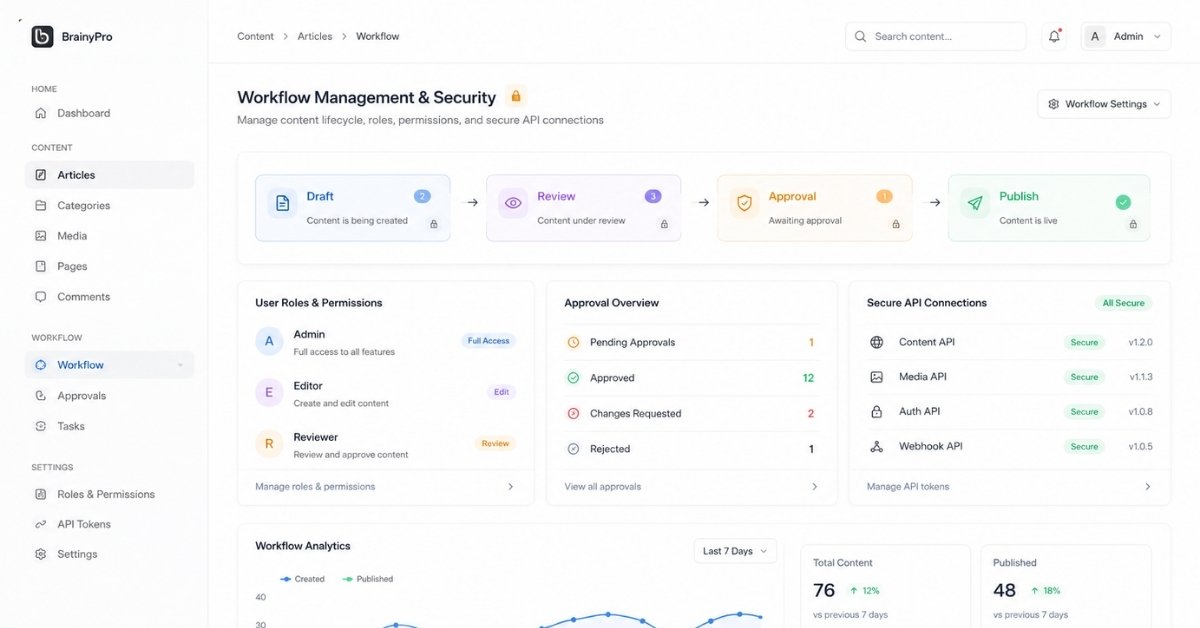
Permission settings give organizations the ability to define roles precisely. Teams can assign access levels for content creation, editing, and approval, ensuring that only authorized personnel can make changes. This reduces the risk of errors or unauthorized modifications while maintaining accountability within the system.
Task tracking also contributes to transparency. Administrators can view which tasks are completed, pending, or delayed, providing a clear picture of operational progress. This helps teams prioritize work, meet deadlines, and ensure that content is delivered consistently and on schedule.
Security is further reinforced through the use of audit logs. Every change, update, or deletion is recorded, allowing administrators to trace actions and identify potential issues. This level of oversight supports regulatory compliance, internal policy adherence, and overall operational governance.
Integration with authentication tools ensures that only verified users can access sensitive content. Enterprises can implement multi-factor authentication, single sign-on, or other security measures to reduce vulnerabilities. These safeguards protect data integrity and minimize risks associated with unauthorized access.
Moreover, distribution and security features support collaboration across departments. Teams can work simultaneously on different content pieces without interference while adhering to clearly defined security protocols. This enables efficient teamwork, reduces mistakes, and maintains a high standard of content quality.
These features empower organizations to scale operations safely. As teams grow and projects become more complex, the system ensures consistent oversight, accountability, and operational efficiency. Enterprises can expand their content distribution while maintaining a secure and well-organized environment.
Deployment and Scalability
Enterprises can deploy self-hosted headless CMS setups or cloud-based solutions. Strapi is scalable, supporting complex distributions and high-volume traffic. Developers can use Node.js to create resilient server-side services.
Deployment flexibility allows organizations to choose the setup that best fits their operational needs. Self-hosted solutions provide complete control over infrastructure, security, and data, making them ideal for enterprises with strict compliance requirements. Cloud-based deployments offer the advantage of reduced maintenance overhead, automatic updates, and easy scaling to handle fluctuating demand. Teams can select the approach that balances cost, performance, and control.
Scalability ensures that the platform can handle growing workloads without compromising performance. As traffic increases, additional resources can be allocated to maintain fast response times and smooth operation. Enterprises running multiple projects or serving content across various regions benefit from a system that grows with their needs, avoiding the risk of bottlenecks or downtime.
The platform’s architecture also supports efficient team collaboration. Different teams can work on separate modules or features simultaneously without interfering with each other’s work. This modularity allows developers to implement new functionalities or adjust existing distributions without disrupting the overall system, ensuring continuous productivity and stability.
Using Node.js for server-side development adds resilience and flexibility. The asynchronous, event-driven architecture supports high concurrency and efficient resource usage, which is essential for applications handling numerous simultaneous requests. Developers can also implement caching, load balancing, and automated monitoring to further improve performance and reliability.
Additionally, the deployment process can be optimized with staged rollouts and testing environments. Enterprises can test updates, new features, or integrations in a safe environment before releasing them to production. This reduces the likelihood of errors and ensures a smoother user experience. Teams can also monitor performance metrics, evaluate results, and make adjustments as needed, providing a controlled and iterative deployment approach.
Scalability and deployment flexibility support long-term growth. Organizations can expand their digital presence, introduce new applications, or accommodate increasing user bases without overhauling the platform. The combination of resilient server-side services, adaptable architecture, and robust deployment options ensures that operations remain reliable, efficient, and future-proof.
Enterprise Migration Strategies
Migrating from an existing content system to a modern platform requires careful planning. Teams must analyze current workflows, identify dependencies, and ensure data integrity throughout the process. Enterprises should conduct thorough testing to minimize disruption and downtime. Migration strategies often involve phased rollouts, allowing different business units to transition sequentially while monitoring performance and user feedback. Clear communication with all stakeholders, including IT, content creators, and management, is critical to maintain operational continuity. Training sessions for staff ensure they can effectively adopt the new platform, making the migration smoother and more efficient.
Effective migration begins with a comprehensive assessment of the existing system. Teams need to map out all content, dependencies, and integrations to identify potential risks or gaps. Understanding the structure, volume, and format of content ensures that nothing is lost or corrupted during migration. It also allows the team to design a strategy that minimizes interruptions to daily operations.
Phased rollouts provide a controlled approach to migration. By transitioning business units or functional areas in stages, organizations can monitor each phase closely, gather insights, and adjust the strategy as needed. This approach reduces the impact of errors, ensures critical processes continue uninterrupted, and provides a smoother experience for end users.
Communication is a key component of successful migration. Stakeholders across departments must be informed of timelines, responsibilities, and changes. Regular updates help prevent misunderstandings and ensure everyone knows their role in the process. Teams can hold meetings, send detailed documentation, or provide dashboards that track migration progress, keeping everyone aligned and accountable.
Staff training is essential to ensure adoption and efficiency. Users must understand new workflows, interfaces, and tools to use the platform effectively. Well-planned training programs reduce confusion, prevent errors, and empower employees to leverage the new system fully. Support materials, hands-on sessions, and ongoing guidance further smooth the transition and build confidence among users.
Additionally, testing is a continuous process during migration. Teams can create test environments to simulate real-world usage, verify data integrity, and identify potential issues before full deployment. Performance monitoring allows the organization to address bottlenecks, optimize processes, and ensure that the new platform meets operational requirements.
Post-migration support is vital. Even after the initial transition, ongoing monitoring, troubleshooting, and feedback collection help organizations refine workflows and maintain operational efficiency. This ensures that the platform delivers long-term value and that staff can continue performing their tasks without disruption.
Performance Optimization Techniques
Optimizing performance is vital for enterprise applications, especially when serving content to large user bases. Techniques include implementing caching mechanisms to reduce load on server-side systems and minimizing redundant data queries. Monitoring server response times and tracking API call efficiency helps identify bottlenecks early. Developers can leverage asynchronous processes for high-volume operations to prevent slowdowns. Regular profiling of applications ensures that resources are used effectively. Additionally, optimizing database queries and indexing improves retrieval speed, while load testing simulates real-world traffic to validate system stability and resilience under heavy demand.
Performance optimization also involves proactive planning and ongoing assessment. Teams can analyze traffic patterns, identify peak usage periods, and allocate resources accordingly. By understanding how users interact with the system, developers can implement targeted improvements that enhance speed, reduce latency, and maintain consistent performance across multiple environments.
Caching strategies can be applied at multiple levels. For instance, frequently accessed content can be stored temporarily closer to the user to reduce the need for repeated server requests. This not only improves response times but also reduces strain on server-side systems, allowing them to handle more simultaneous users without degradation in performance.
Asynchronous processing enables resource-intensive operations to run in the background, preventing delays for users. For example, tasks such as data aggregation, batch updates, or report generation can be processed independently, freeing up the system to respond to real-time requests efficiently. This approach ensures a smoother user experience, even during high-demand periods.
Database optimization is another critical aspect. Proper indexing, query tuning, and efficient schema design improve retrieval times and reduce the workload on servers. Developers can also partition or shard large datasets to enhance performance for high-traffic applications. Regular review and adjustment of database structures help maintain efficiency as content volumes grow.
Load testing and stress simulations provide insights into system behavior under heavy traffic. By replicating real-world scenarios, teams can identify potential failure points, optimize resource allocation, and implement fail-safes or redundancy measures. This proactive approach ensures reliability and reduces downtime, which is especially critical for enterprise-grade applications.
Continuous monitoring and profiling help maintain optimal performance over time. Metrics such as response times, resource usage, and throughput allow teams to detect anomalies early and take corrective action. Coupled with automation and alerts, these practices enable ongoing system health management without constant manual intervention.
Combining these techniques fosters an environment of efficiency and resilience. Optimized systems handle increasing workloads, support scalability, and provide end-users with a fast and consistent experience. This approach reduces operational risks and ensures that the platform can sustain high performance even as organizational needs evolve.
Integrating Strapi With Modern Frontends
Connecting server-side systems with modern frontend frameworks requires careful planning to ensure smooth data flow. Enterprises often use component-based frameworks to create dynamic user interfaces that consume server-side data efficiently. Integration involves mapping content models to frontend components and setting up consistent data retrieval methods. Proper error handling and validation are essential to maintain reliability. Collaboration between server-side and user-interface teams is critical, with regular sync-ups to align API contracts and ensure that changes do not break the interface. This integration allows developers to deliver a seamless and responsive experience across multiple devices and platforms.
Effective integration starts with a clear understanding of the data structures and relationships between different content types. Teams must analyze how each piece of content will be displayed, identify dependencies, and determine the optimal way to fetch and render data. By mapping content models to client-side components, developers ensure that information is presented accurately and efficiently.
Error handling and validation are crucial for maintaining system reliability. Client-side applications should handle missing data, incorrect formats, or failed requests. This prevents user-facing errors and reduces downtime, creating a smoother experience for end users. Additionally, implementing logging and monitoring allows teams to detect and resolve issues quickly before they affect the broader system.
Collaboration between backend and UI teams is another key success factor. Regular communication ensures that API contracts, naming conventions, and data expectations are aligned. When changes occur in backend structures or endpoints, UI developers can adjust components accordingly, avoiding interface breakages. This alignment fosters trust, efficiency, and predictable delivery of features.
Furthermore, component-based frameworks provide opportunities for reusability and modularity. Developers can create components that are adaptable to multiple pages, applications, or devices, reducing redundant work. Combined with consistent data retrieval methods, this approach supports uniformity across the user interface and simplifies future updates or redesigns.
Integration also involves performance optimization. Teams can implement techniques such as lazy loading, caching, and optimized rendering to reduce latency and improve responsiveness. By analyzing user interactions and traffic patterns, developers can adjust data fetching strategies and component rendering to deliver smooth experiences even under high demand.
This structured approach to integration enables organizations to maintain a cohesive digital presence across multiple channels. Users experience consistent, reliable interfaces, while teams can continue developing features without disrupting disruptions or causing regressions. Over time, this integration methodology supports scalability, innovation, and operational efficiency.
Enterprise Governance and Compliance
Maintaining governance and compliance is a top priority for large organizations. Role-based access and approval ensure that sensitive content is handled by authorized personnel. Audit trails track changes, making it easier to monitor activity and comply with regulatory standards. Enterprises must regularly review and update access policies to reflect organizational changes. Security best practices, such as multi-factor authentication and encryption, help protect data integrity. Ensuring compliance with industry regulations, such as privacy and accessibility requirements, fosters trust with customers and stakeholders. Governance frameworks also provide clear accountability, reducing operational risk.
Effective governance begins with clearly defined roles and responsibilities. Each team member should understand their permissions, limitations, and reporting lines. When roles are well-structured, content operations are more organized, and the risk of accidental or unauthorized changes decreases. Organizations can also implement checks and balances to ensure that critical content moves through proper approval channels before publication.
Approval supports operational integrity by enforcing review processes. Teams can define stages for content creation, editing, and final approval. This ensures consistency, minimizes errors, and maintains quality across all publications.
Audit trails provide transparency by recording every modification, deletion, or addition to content. These logs help organizations trace actions back to specific users and timestamps. They are invaluable for internal audits, investigations, or reporting to regulatory bodies. Audit trails also enable organizations to analyze patterns and identify areas where additional training or process improvements may be needed.
Regular policy reviews ensure that governance remains aligned with organizational changes. As teams grow, systems evolve, or regulations change, access policies and approval must be updated accordingly. This proactive approach reduces gaps in compliance and ensures that content management remains secure and reliable.
Security measures such as multi-factor authentication, encryption, and secure protocols protect data from unauthorized access or breaches. These practices safeguard not only content but also sensitive operational information and user data. By implementing security best practices, organizations minimize risks associated with cyber threats or accidental data exposure.
Compliance with industry regulations, including privacy, accessibility, and other sector-specific requirements, is critical. Adherence to these standards fosters confidence among customers, partners, and regulators. Enterprises that demonstrate consistent compliance strengthen their reputation and build trust with stakeholders, while avoiding potential fines or legal complications.
Governance frameworks provide accountability, transparency, and clarity. Teams understand who is responsible for each task, reducing ambiguity and operational risk. With clear policies and procedures, organizations can scale operations confidently, knowing that content integrity, security, and compliance will be maintained across all activities.
Extending Strapi with Custom Plugins
Customization enables enterprises to address specific business challenges effectively. Developers can develop custom plugins that enhance the platform’s core capabilities. This approach allows organizations to implement specialized distributions, integrate external services, or automate repetitive tasks. Custom modules can be designed to optimize content operations and improve team efficiency. Collaboration between product managers, developers, and content teams ensures that custom solutions align with business objectives. Periodic evaluation of these modules guarantees that they remain relevant as technology and business needs evolve. Extending the platform also allows enterprises to differentiate their digital experiences from competitors.
Custom plugins impart organizations with the ability to address very specific operational challenges. For example, teams can create modules that automatically generate reports, validate content, or enforce organizational policies. By designing plugins tailored to internal processes, enterprises can reduce manual effort, streamline repetitive tasks, and enhance overall productivity.
Collaboration during plugin development is crucial. Product managers can define requirements, developers can implement technical solutions, and content teams can ensure practical usability. Regular feedback loops and testing sessions allow teams to refine functionality and avoid misalignment with business objectives. This collaborative approach ensures that custom modules are not only functional but also practical and user-friendly.
Periodic evaluation of plugins helps maintain relevance and effectiveness. As organizational needs evolve or new technologies emerge, older modules may require updates, optimizations, or replacements. Regular review cycles ensure that plugins continue to deliver value and adapt to changing business processes.
Extending the platform with custom solutions also supports innovation. Enterprises can experiment with new approaches and test different content flows without disrupting existing operations. This flexibility enables organizations to differentiate their offerings, create unique digital experiences, and respond quickly to market demands.
Additionally, a well-structured plugin ecosystem improves maintainability. Developers can document each module, establish clear standards, and implement version control. This ensures that updates, troubleshooting, or onboarding new team members can be handled efficiently, reducing operational risk and preserving knowledge within the organization.
By combining these strategies, enterprises benefit from a more agile, adaptable, and future-proof system. Tailored plugins not only enhance operational efficiency but also empower teams to innovate confidently, maintain high-quality content operations, and deliver a superior experience across digital platforms.
FAQ’s
1. What is Strapi?
Strapi is a headless content management system separating backend and frontend, allowing multi-platform content delivery.
2. Can I migrate an existing CMS to Strapi?
Yes, enterprises can move existing CMS content to Strapi securely with minimal downtime.
3. How secure is Strapi?
Strapi provides permission control, admin panel access, and secure web applications for enterprise content protection.
4. Can Strapi interface with other systems?
Yes, Strapi integrates via REST, RESTful, and GraphQL APIs, connecting with third-party tools efficiently.
5. Can I hire Strapi developers?
Yes, you can hire such developers or consult a development agency for custom Strapi solutions tailored to your business needs.
6. Is Strapi scalable?
Yes, Strapi supports headless CMS platforms, self-hosted headless CMS, and multi-channel deployments.
7. What services do Strapi development companies provide?
Services include CMS development services, custom development services for Strapi, plugin development, and ongoing support. At Dukami, we provide end-to-end solutions. Contact us to understand how we can help you.
Conclusion
Modern businesses need systems that support flexibility, efficiency, and long-term growth. This article shows the value of using Strapi to build scalable and well-structured digital solutions. Strong workflows and clear collaboration improve day-to-day operations.
Given the complexity of the development process, availing custom development services for Strapi can be a good idea.