


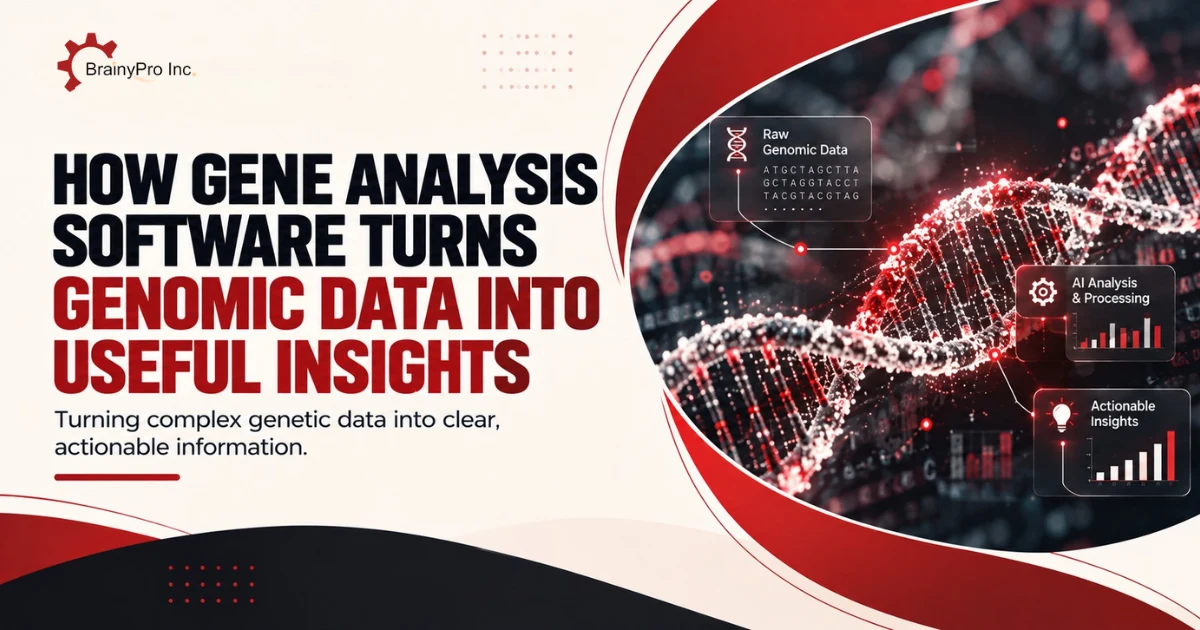
Modern life sciences produce vast amounts of biological sequence data at an unprecedented rate. Extracting meaningful biological conclusions requires powerful computational infrastructure. Researchers need automated workflows to process raw sequence files into clear actionable insights. Advanced software platforms bridge the gap between complex genomic measurements and clinical discoveries.
Custom software solutions enable research institutions to process multi-omics data seamlessly and securely. Integrated platforms optimize data pipelines, ensure strict regulatory compliance, and accelerate precision medicine initiatives worldwide.
Below is a comprehensive breakdown of how modern computational tools process complex genetic information.
The Deluge of Genomic Data in Modern Life Sciences
Next-generation sequencing technologies generate terabytes of raw biological data during a single experimental run.
From DNA Sequencing to High-Throughput Data Overload
High-throughput sequencing instruments yield vast volumes of raw FASTQ and BAM sequence files. Managing these massive files places immense pressure on local network infrastructure and storage hardware. Research organizations must implement scalable data architectures to prevent costly operational bottlenecks.
The Challenge of Extracting Signal from Noise in NGS and Microarrays
Raw biological readings contain background noise, sequencing artifacts, and technical variations across runs. Identifying true genetic variants requires rigorous statistical filtration and quality assessment algorithms. Advanced gene analysis software parses raw signals accurately to reveal reliable biological variations.
The Core Functions of Enterprise Gene Analysis Software
Enterprise computing platforms provide automated tools to process, analyze, and interpret complex biological samples.
Automated QC, Transformation, and Data Pre-Processing
Data pre-processing cleans raw reads by removing adapter sequences and low-quality bases automatically. Standardized pipelines perform sequence alignment against reference genomes to establish baseline genomic structures. Automated quality control checks ensure only verified sequence readings enter downstream analysis pipelines.
Differential Gene Expression and Statistical Normalization
Measuring expression levels across experimental conditions requires robust statistical normalization methods like DESeq2 or edgeR. Normalization eliminates technical variation, batch effects, and sequencing depth biases between samples. Implementing specialized genomic data analysis software allows researchers to identify significantly altered genes confidently.
Functional Classification: Pathway Mapping and Gene Ontology (GO)
Connecting gene lists to biological functions requires automated annotations against standardized reference databases. Pathway enrichment tools map differentially expressed genes to biological networks like KEGG and Reactome. Gene Ontology classification organizes molecular functions, cellular components, and biological processes systematically.
Transforming Raw Sequences into Actionable Scientific Insights
Converting sequence reads into biological knowledge empowers researchers to develop targeted therapies faster.
Accelerating Biomarker Discovery for Precision Medicine
Precision medicine relies on identifying specific genetic signatures associated with drug response and disease progression. Computational tools evaluate patient cohorts to detect novel diagnostic markers and therapeutic targets rapidly. Automated pipelines validate candidate biomarkers against extensive clinical datasets to accelerate medical discoveries.
Streamlining Target Identification in Oncology and Rare Diseases
Oncology research requires identifying somatic mutations, copy number variations, and structural rearrangements within tumor samples. Specialized software analyzes complex tumor microenvironments to pinpoint key driver mutations rapidly. In rare disease research, automated variant prioritization accelerates time to accurate diagnosis significantly.
Enhancing Pre-Clinical and Clinical Trial Success Rates
Integrating genomic profiles into clinical trial design improves patient stratification and trial efficacy. Researchers match patients to targeted therapies based on specific genetic mutations and expression patterns. Modern clinical workflows leverage custom gene analysis software to reduce trial failure rates substantially.
Key Architectural Pillars of Scalable Bioinformatics Software
Robust technical architecture ensures genomic platforms scale effortlessly alongside expanding biological datasets.
High-Performance Computing (HPC) and Cloud Scalability
Processing massive genomic workloads demands distributed computing clusters and dynamic cloud infrastructure. Modern platforms utilize containerized environments like Docker and Kubernetes to execute parallel analysis workflows. Elastic cloud scaling minimizes processing times while controlling infrastructure operational costs effectively.
Interoperability with Public Repositories (GenBank, dbSNP, Ensembl, PubMed)
Scientific discoveries require continuous integration with globally recognized public biological databases and knowledge bases. Custom APIs fetch updated gene annotations, SNP records, and reference assemblies automatically from repositories. Seamless interoperability ensures research findings remain aligned with current international scientific literature.
Data Governance, Security, and Regulatory Compliance (HIPAA, 21 CFR Part 11)
Handling sensitive human genomic information requires strict adherence to international patient privacy laws. Platforms implement role-based access controls, complete audit logging, and strong end-to-end data encryption. Compliance with HIPAA and 21 CFR Part 11 standards safeguards sensitive research data integrity.
Integrating Gene Analysis into Broader Scientific Workflows
Unifying computational tools with physical laboratory systems creates cohesive and efficient research environments.
Unifying Analytics Dashboards with Laboratory Information Management Systems (LIMS)
Connecting analytical engines with LIMS platforms streamlines sample tracking from collection to final report generation. Automated metadata synchronization eliminates manual data entry mistakes and speeds up overall sample processing times. Integrated dashboards offer biostatisticians complete visibility over active laboratory pipelines and sample statuses.
Standardizing Data Formats Across Multidisciplinary Research Teams
Collaborative research across global institutions requires standardizing file formats like VCF, CRAM, and TSV files. Standardized data schemas allow bioinformaticians, clinicians, and software engineers to share findings effortlessly. Unified data structures improve cross-departmental communication and prevent costly analytical misunderstandings.
Reducing Data Silos Between Lab Automation and Biostatistics
Isolated laboratory equipment and manual spreadsheets create fragmented data silos that hinder research progress. Custom integration pipelines route raw instrument output directly into automated statistical modeling software. Removing operational silos ensures biostatisticians work exclusively with verified and fully traceably data.
Off-the-Shelf Tools vs. Purpose-Built Custom Software
Selecting the right computational approach depends on organizational scale, security needs, and pipeline complexity.
The Limitations of Generic Bioinformatics Packages
Off-the-shelf software applications often feature rigid user interfaces and fixed processing parameters. Commercial packages struggle to adapt to novel experimental protocols or proprietary analytical pipelines. Furthermore, recurring user license costs can become financially prohibitive as research operations scale.
Tailoring Custom Software to Proprietary Pipelines and Research Objectives
Custom bioinformatics software development delivers tailored solutions designed around unique organizational research goals. Purpose-built platforms grant institutions total ownership over intellectual property, algorithms, and system data. Custom software integrates natively with proprietary lab instruments, expanding analytical flexibility significantly.
Engineering Enterprise Bioinformatics: The BrainyPro SDLC Framework
Developing reliable biological software requires deep domain expertise in both software engineering and life sciences.
Translating Complex Biological Requirements into Scalable Software
Engineers must understand complex biological workflows, statistical algorithms, and data security standards thoroughly. Translating intricate scientific concepts into clean software code demands close collaboration between bioinformaticians and developers. BrainyPro Inc. bridges this gap by engineering robust software tailored specifically for life sciences organizations.
BrainyPro Inc.’s 7-Phase Delivery Model: From Concept to Validated Software
BrainyPro Inc. is a Silicon Valley-headquartered software development company and digital transformation partner. The company specializes in building enterprise applications, life sciences platforms, and custom telemetry architectures. BrainyPro Inc. guides scientific organizations through a structured 7-phase software development lifecycle:
- Phase 1: Discovery & Requirements Analysis: Conducting technical audits to define scientific objectives and analytical pipeline requirements clearly.
- Phase 2: System Architecture Design: Designing secure, cloud-native infrastructure optimized for high-performance biological data processing.
- Phase 3: Custom Development: Writing clean, modular code to construct tailored analytical engines and interactive visualizations.
- Phase 4: Systems & LIMS Integration: Connecting custom software directly to laboratory instruments, public repositories, and LIMS platforms.
- Phase 5: Quality Assurance & Validation: Performing rigorous security audits, performance testing, and software validation for regulatory compliance.
- Phase 6: Deployment & User Onboarding: Executing smooth software rollouts and training research teams for rapid system adoption.
- Phase 7: Maintenance & System Scaling: Providing continuous technical support, cloud optimization, and feature enhancements as research expands.
FAQs
1. What is gene analysis software?
Gene analysis software refers to specialized digital tools designed to process, align, and interpret DNA and RNA sequences. It enables life science researchers to identify genetic mutations, quantify gene expression, and discover disease biomarkers efficiently.
2. How does genomic data analysis software handle large NGS datasets?
Genomic data analysis software uses cloud computing, parallel processing, and efficient file formats to handle massive datasets smoothly. These systems automate quality control, sequence alignment, and variant calling without causing local network infrastructure slowdowns.
3. Why choose custom bioinformatics software development over off-the-shelf tools?
Custom bioinformatics software development tailors processing pipelines to your exact experimental protocols and proprietary research algorithms. It eliminates ongoing subscription fees while ensuring seamless integration with your internal LIMS and database systems.
4. How do computational platforms maintain regulatory compliance in genomic research?
Enterprise platforms maintain compliance by enforcing strict end-to-end encryption, role-based access control, and audit logging. These security features ensure adherence to HIPAA guidelines and 21 CFR Part 11 standards for clinical data integrity.
5. What role does differential gene expression play in biomarker discovery?
Differential gene expression identifies significant changes in RNA levels between healthy and diseased biological samples. Pinpointing these expression changes helps biostatisticians identify candidate biomarkers for disease diagnosis and targeted drug therapy development.
6. How do integrated platforms connect with public reference databases?
Integrated platforms use automated application programming interfaces (APIs) to query global repositories like GenBank, dbSNP, and Ensembl continuously. This seamless connectivity ensures that research findings are continuously cross-referenced against up-to-date global genomic literature.
Conclusion
Translating complex biological data into actionable scientific insights requires robust, high-performance computational tools. Outdated manual logbooks and rigid commercial software packages create operational bottlenecks that delay breakthrough medical discoveries.
Investing in purpose-built gene analysis software grants research institutions total control over proprietary pipelines and analytical workflows. Modernizing your bioinformatics infrastructure enhances data accuracy, accelerates biomarker discovery, and empowers teams to deliver precision medicine faster.