


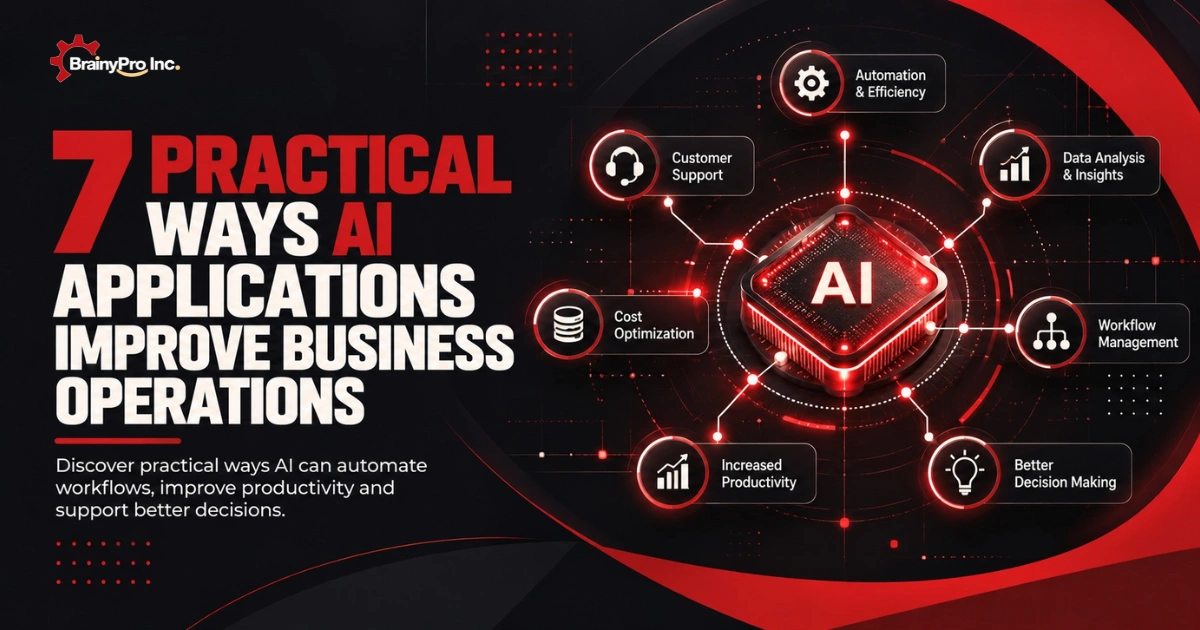
Modern companies handle huge volumes of data every single day. Operating without modern smart automation creates major efficiency bottlenecks across departments. Manual data entry leads to frequent human errors and lost productivity. In addition, slow business processes hurt customer satisfaction and increase operational costs. Implementing custom AI application development helps organizations streamline complex daily workflows. Intelligent tools keep business operations running smoothly, accurately, and efficiently.
The Operational Imperative: Moving Beyond Generative AI Hype
Many companies test basic artificial intelligence tools without achieving clear business results. True operational transformation requires moving past simple chat interfaces toward deep platform integration.
Translating Artificial Intelligence into Measurable Enterprise ROI
Businesses must focus on clear financial metrics when deploying modern digital tools. Automated systems reduce manual labor costs while accelerating daily task completion. Furthermore, smart tools minimize operational errors that cause costly project delays. Tracking time saved and error reduction proves real financial return on technology investments.
Why Off-the-Shelf AI Models Fall Short of Complex Operational Demands
Generic software tools cannot handle unique company procedures or specialized data formats. Standard models often lack necessary security features required for sensitive business information. Additionally, pre-built solutions fail to integrate smoothly with legacy enterprise databases. Custom digital architectures solve these limits by matching your exact operational requirements.
1. Intelligent AI Workflow Automation Across Core Business Systems
Manual repetitive tasks slow down employee productivity and create operational backlogs. Deploying smart AI workflow automation eliminates manual data handling across legacy enterprise software platforms.
Automating Multi-Step Data Ingestion, Extraction, and Reconciliation
Information arrives in many formats, including scanned documents, emails, and digital forms. Smart software reads unstructured documents and extracts key information automatically with high accuracy. The system then reconciles incoming records against central database entries instantly. Automated data extraction frees employees to focus on high-value strategic initiatives.
Eliminating Manual Bottlenecks in Enterprise Resource Planning (ERP) Pipelines
Legacy ERP systems often require manual updates across multiple departmental databases. Intelligent automation bridges software gaps by transferring data between systems automatically. For instance, incoming invoice data updates inventory records and accounting ledgers without manual input. Streamlined system pipelines increase processing speed while maintaining total record accuracy.
2. Predictive Maintenance and Dynamic Asset Management
Unexpected equipment failures cause costly operational delays and disrupt production schedules. Advanced machine learning models help maintenance teams spot mechanical issues before breakdowns happen.
Leveraging Machine Learning to Forecast Equipment and System Failure
Connected hardware sensors continuously record temperature, vibration, and performance metrics. Smart algorithms analyze sensor streams to spot abnormal operational patterns early. Consequently, maintenance teams receive instant alerts about potential equipment failures before damage occurs. Timely repairs extend machinery lifespan and protect critical operational infrastructure.
Reducing Costly Unplanned Downtime Across Telematics and Industrial Hardware
Unplanned equipment stoppage halts production lines and ruins operational schedules. Predictive maintenance enables technicians to schedule repairs during planned low-activity windows. As a result, businesses avoid expensive rush fees for replacement hardware parts. Continuous machinery monitoring lowers overall repair costs and keeps production moving steadily.
3. Real-Time Anomaly Detection and Enterprise Risk Mitigation
Securing sensitive financial records and digital assets requires constant operational vigilance. Advanced algorithmic monitoring protects enterprise networks from external threats and internal errors.
Automated Financial Auditing, Fraud Detection, and Transaction Monitoring
Manual financial audits take considerable time and miss subtle fraudulent patterns. Intelligent monitoring software analyzes thousands of daily financial transactions in real time. The system flags unusual purchasing behaviors and unexpected account transfers instantly. Automated oversight protects company assets and simplifies standard regulatory accounting audits.
Continuous Security Threat Hunting in High-Throughput Cloud Architectures
Modern enterprise cloud environments process massive amounts of network activity data continuously. Security monitoring algorithms inspect network traffic patterns to identify active digital security breaches. Automated defenses isolate compromised cloud servers before data theft occurs. Continuous digital oversight maintains system security without slowing down daily business operations.
4. Hyper-Personalized Customer Experience and Intelligent Service Portals
Customer expectations for rapid digital support continue to grow across all industries. Smart digital service portals deliver instant, accurate responses to complex user inquiries.
Augmenting Customer Support with Context-Aware AI Applications
Standard digital chatbots often irritate users by providing generic, unhelpful answers. Context-aware enterprise AI development builds support tools that understand complete customer accounts and interaction histories. The system retrieves relevant account details to resolve complex service requests quickly. Personalized support interactions build client trust and increase long-term user retention.
Accelerating Issue Resolution via Natural Language Processing (NLP) Engines
Advanced natural language engines analyze incoming customer service tickets to classify requests instantly. The software routes complex issues to the correct support specialist automatically. Furthermore, automated systems handle standard requests like password resets without human support intervention. Faster issue resolution improves customer experience while reducing total support team costs.
5. Automated Decision Support in Complex Data Ecosystems
Executive decision-making requires analyzing complex datasets quickly and accurately. Smart decision support tools convert raw operational figures into actionable business recommendations.
Enhancing Accuracy in Clinical Trial Data Analysis and Bioinformatics Research
Life science organizations manage massive amounts of biological and clinical test data. Intelligent analytics platforms search research records to identify subtle therapeutic trends rapidly. Automated validation checks eliminate duplicate patient records and highlight unexpected test anomalies. High-speed data processing accelerates scientific discovery while maintaining rigorous medical compliance standards.
Empowering Executives with Real-Time Predictive Business Intelligence
Traditional executive reports present past operational data that may already be outdated. Modern predictive business platforms analyze active market trends to forecast future sales demand. Consequently, leadership teams adjust business strategies based on real-time data insights. Data-driven decision support reduces risk when expanding into competitive new markets.
6. Dynamic Supply Chain Orchestration and Demand Forecasting
Global supply chain networks face constant disruptions from shifting weather, economic changes, and market volatility. Intelligent logistics software optimizes inventory management and transport routes dynamically.
Optimizing Inventory Levels and Route Dispatching with Real-Time Data Ingestion
Overstocking inventory ties up critical working capital, while stockouts cause lost sales opportunities. Smart forecasting software balances warehouse inventory levels using active sales data and seasonal trends. Additionally, route optimization tools adjust delivery schedules based on live traffic conditions. Optimal route planning reduces fuel expenses and improves on-time delivery rates.
Adapting Automatically to Global Logistics Disruptions and Market Volatility
Unexpected shipping delays disrupt production schedules and delay customer orders. Intelligent supply chain systems reroute shipments automatically when logistical bottlenecks occur at major transit hubs. The software identifies alternative suppliers instantly to prevent raw material shortages. Proactive supply chain management protects business operations against external economic shocks.
7. Transforming Unstructured Enterprise Knowledge into Searchable Assets
Valuable business knowledge often remains trapped inside scattered files, contracts, and internal emails. Smart document management tools unify corporate knowledge into a single searchable digital library.
Unlocking Insights from Siloed Documents, Contracts, and Research Repositories
Employees spend valuable hours searching through disconnected folder structures for critical information. Specialized search applications scan internal contracts, technical manuals, and project reports automatically. Employees type natural questions and receive precise answers sourced directly from corporate documents. Rapid information access improves collaboration and eliminates redundant internal research efforts.
Accelerating Onboarding and Technical Knowledge Sharing Across Teams
Onboarding new team members requires significant time from experienced senior staff. Dedicated knowledge portals answer employee questions about internal procedures and software architecture instantly. New hires find relevant training materials and technical documentation without delay. Streamlined knowledge sharing reduces onboarding times and boosts team productivity quickly.
Strategic Execution: Off-the-Shelf SaaS vs. Custom AI Software Development
Choosing the right software strategy determines long-term digital transformation success for your business. Tailored engineering delivers superior performance compared to restrictive, off-the-shelf software packages.
The Hidden Costs and Governance Risks of Third-Party AI Platforms
Off-the-shelf software tools look affordable initially, but costs escalate quickly through per-user licensing fees. Furthermore, third-party platforms may store sensitive corporate data on public cloud servers, creating security risks. Standard SaaS packages offer limited customization options for unique business processes. Over-reliance on vendor platforms limits operational flexibility and creates long-term system dependencies.
Tailoring Enterprise AI Development to Proprietary Workflows and Data Models
Investing in custom AI software development ensures your platform aligns perfectly with internal operational procedures. Tailored systems integrate smoothly with existing software databases and security management tools. Furthermore, your organization retains total ownership of the underlying software source code and proprietary data models. Custom digital solutions scale effortlessly alongside your business without increasing ongoing user licensing fees.
FAQs
1. What is custom AI software development?
Custom AI software development is the process of engineering tailored digital platforms designed for your company’s specific operational needs. These personalized solutions integrate directly with your existing enterprise databases, protect proprietary data, and streamline complex business workflows. Investing in custom tools ensures total system ownership without recurring third-party licensing fees.
2. How does AI workflow automation improve business efficiency?
AI workflow automation removes manual data entry bottlenecks by handling multi-step tasks across core enterprise software systems. Smart algorithms extract document data, update ERP records, and reconcile financial accounts automatically with high precision. Eliminating manual work reduces operational errors and allows employees to focus on high-value strategic tasks.
#3. Why should companies choose custom enterprise AI development over off-the-shelf SaaS?
Custom solutions offer full software ownership, enhanced data security, and total flexibility to match your exact business procedures. Generic off-the-shelf SaaS tools impose rigid operational templates and hide high long-term costs inside scaling per-user subscription fees. Developing custom software ensures your digital infrastructure grows seamlessly alongside your business goals.
4. How does predictive maintenance reduce business operating costs?
Predictive maintenance uses connected hardware sensors and machine learning algorithms to detect early machinery degradation patterns. Spotting technical issues early enables maintenance teams to schedule repairs before catastrophic equipment failures occur. Preventing unexpected downtime saves money on expensive emergency hardware replacements and protects production timelines.
5. What is the role of natural language processing in customer service portals?
Natural language processing engines analyze incoming service inquiries to understand user intent and classify help tickets instantly. The software retrieves relevant customer account data to deliver accurate, context-aware answers without human delay. Automated support handling accelerates issue resolution times while reducing overall support operational costs.
6. How does BrainyPro Inc. ensure high security in AI application development?
BrainyPro Inc. enforces strict security standards, robust data encryption, and role-based access controls across all software platforms. Our disciplined 7-phase software development lifecycle incorporates rigorous security validation and compliance testing before application deployment. Partnering with our Fremont, California team guarantees reliable, audit-ready software built for high-throughput enterprise environments.
Conclusion
Modern businesses must adopt intelligent digital tools to optimize daily operations, lower expenses, and remain competitive. Deploying custom solutions like AI workflow automation streamlines data processing, enhances risk management, and lowers equipment downtime. While pre-built software options impose rigid functional limits, custom AI application development delivers scalable systems built specifically for your business goals.