


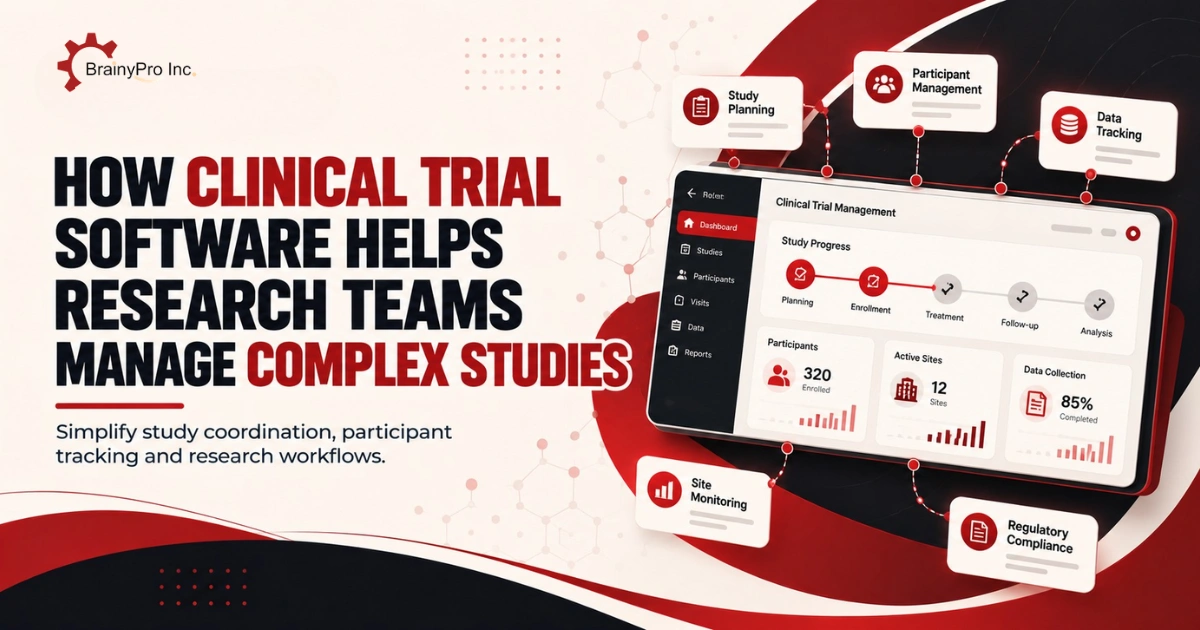
Managing complex clinical studies manually creates severe operational risks for research teams. Paper records cause human errors, delayed site activation, and severe protocol deviations. Furthermore, uncoordinated communication between sponsors and study sites triggers massive budget overruns. Modern trials require high precision, speed, and strict regulatory compliance. Investing in advanced clinical trial software development turns fragmented research tasks into unified digital operations. Specialized software keeps complex trials running smoothly, on schedule, and fully compliant with international safety standards.
The Mounting Structural Complexity of Modern Clinical Research
Modern medical research involves complex study protocols, high data volume, and remote trial locations. Consequently, legacy management methods can no longer support the fast-paced demands of contemporary drug development.
Escalating Protocol Demands, Global Site Distributions, and Massive Data Ingestion
Modern trial designs feature multi-arm cohorts, adaptive phases, and complex biological endpoints. Furthermore, research teams coordinate operations across international sites, diverse patient populations, and distinct regulatory jurisdictions. Modern medical devices and wearable sensors continuously stream massive amounts of health data. Processing this high-volume data stream manually creates severe operational bottlenecks for research managers.
The Failure of Fragmented Spreadsheets and Legacy Paper-Based Workflows
Relying on static spreadsheets and paper forms degrades total data integrity. Manual data entry creates frequent transcription errors, duplicate records, and untracked document revisions. In addition, paper records delay real-time monitoring, preventing managers from spotting safety trends early. Scattered files also prevent teams from maintaining a single, reliable source of study truth.
Centralizing Protocol Operations and Multisite Execution
Centralized software platforms unify daily trial tasks and streamline multi-site research activities effectively. Building a unified digital portal gives sponsors and research organizations total visibility over site operations.
Streamlining Site Feasibility, Investigator Selection, and Activation
Finding qualified research sites and principal investigators requires detailed operational evaluations. Specialized trial platforms automate feasibility surveys, candidate scoring, and credential verification workflows. Digital workflows reduce onboarding delays by automating document collection and contract reviews. Fast site activation allows research teams to start patient recruitment weeks ahead of traditional schedules.
Unifying Operational Dashboards Across Sponsors, CROs, and Trial Coordinators
Trial sponsors, Contract Research Organizations (CROs), and site coordinators must collaborate without communication barriers. Centralized management software provides role-based dashboards tailored to every stakeholder’s operational needs. Real-time metrics track enrollment targets, protocol milestones, and budget burn rates automatically. Unified dashboards eliminate miscommunication and keep all research partners aligned on core study goals.
Driving Hybrid and Remote Study Execution via Decentralized Clinical Trial Software
Modern medical studies increasingly adopt virtual and hybrid models to make participation easier for patients. Deploying flexible decentralized clinical trial software allows research teams to reach diverse, location-independent patient groups.
Removing Geographical Barriers through Hybrid and Virtual Trial Architecture
Traditional physical site visits limit patient recruitment to narrow geographic areas. Virtual trial technology enables patients to log medical data directly from home using connected devices. Hybrid study models combine local clinic visits with secure remote data collection tools seamlessly. Removing travel burdens increases overall participant diversity and accelerates recruitment timelines significantly.
Automating Telehealth Visits and Remote Site Monitoring Pipelines
Integrated video platforms enable research clinicians to conduct compliant virtual check-ins with patients anywhere. Remote site monitoring pipelines give clinical research associates instant digital access to source documents. Auditors can verify data quality continuously without traveling physically to individual study sites. Automated monitoring workflows reduce operational expenses while maintaining rigorous oversight across all study locations.
Transforming Subject Data Ingestion with eCOA ePRO Software
Accurate patient feedback is critical for measuring drug efficacy and identifying potential adverse events early. Implementing eCOA ePRO software digitizes patient outcomes, capturing reliable clinical data directly at the moment of experience.
Capturing Direct-from-Patient Outcomes in Real-Time to Mitigate Recall Bias
Paper patient diaries often suffer from low compliance and inaccurate backfilled entries. Electronic outcome assessments prompt patients to log symptoms and medication intake at exact intervals. Real-time digital time-stamps ensure data authenticity and eliminate retrospective recall bias completely. Immediate data entry gives research team members accurate insights into real-world patient experiences.
Enhancing Data Quality Across Daily Symptom Logs and Clinical Questionnaires
Digital questionnaires guide participants through complex survey logic, preventing missed questions or invalid entries. Custom validation rules block impossible numerical values and highlight logical inconsistencies before submission. Automated alerts notify research coordinators immediately if a patient reports severe adverse symptoms. High-quality patient data simplifies statistical analysis and speeds up scientific evaluation cycles.
Maximizing Retention via Clinical Trial Patient Engagement Software
Keeping study subjects engaged throughout multi-year trials prevents high drop-out rates and costly study delays. Utilizing modern clinical trial patient engagement software builds strong communication channels between clinical teams and participants.
Mitigating Subject Dropouts with Automated Appointment Reminders and Notifications
Participant dropouts disrupt study timelines and increase total recruitment costs significantly. Automated notification systems send personalized SMS and email reminders for upcoming clinical visits. Mobile apps notify subjects when to take study medications or complete required daily logs. Consistent, helpful communication keeps participants engaged and lowers total study attrition rates.
Implementing Interactive Digital eConsent and Educational Portals
Paper consent forms can confuse subjects with dense legal text and complex medical terminology. Digital eConsent tools use interactive videos, graphics, and comprehension quizzes to explain study risks clearly. Patients can review documents at their own pace and sign forms securely online. Educational portals provide ongoing study updates, making participants feel valued throughout their clinical journey.
Maintaining Strict Regulatory Compliance and Data Integrity
Clinical software must comply with global regulatory frameworks to ensure scientific validity and patient safety. Advanced security architectures protect sensitive patient records from unauthorized access and cyber threats.
Enforcing 21 CFR Part 11, HIPAA, and GCP Standards via Automated Audit Trails
Regulatory authorities demand strict data traceability and protection across all digital research platforms. Compliance software enforces 21 CFR Part 11 standards using secure electronic signatures and system permissions. Detailed, immutable audit trails automatically record every data entry, edit, and user timestamp. Encrypted data storage ensures total HIPAA compliance, protecting patient privacy across all network endpoints.
Interoperable EHR-to-EDC Data Migration and CDISC SDTM Dataset Standardization
Manual data transfer between Electronic Health Records (EHR) and Electronic Data Capture (EDC) systems causes errors. Advanced software integrations automate medical data migration, reducing manual data entry for site staff. Built-in standardization tools convert raw clinical data into CDISC SDTM formats automatically. Standardized datasets streamline regulatory submission processes and accelerate formal agency review timelines.
Off-the-Shelf CTMS vs. Custom Clinical Trial Software Development
Off-the-shelf management systems often lack the flexibility required for specialized or novel study protocols. Tailored software development allows life science companies to build platforms configured to their exact operational workflows.
The Bottlenecks of Rigid, Monolithic Clinical Software Packages
Generic trial management packages force research teams to adapt their workflows to rigid software interfaces. Unnecessary legacy features clutter user dashboards and slow down daily research tasks. Standard packages often require costly vendor customization fees to add basic custom data fields. Furthermore, per-user licensing costs escalate rapidly as clinical trials scale across global sites.
Engineering Tailored Systems Aligned with Proprietary Trial Protocols
Custom software development delivers targeted digital tools built specifically for your unique research needs. Tailored applications integrate smoothly with existing lab hardware, proprietary algorithms, and internal databases. Custom interfaces streamline user experience, reducing training times for clinical coordinators and patients alike. Owning your custom software platform eliminates perpetual user fees and protects intellectual property assets.
FAQs
1. What is clinical trial software development?
Clinical trial software development is the engineering of specialized digital platforms that manage, track, and automate medical research workflows. These custom solutions centralize study management, automate patient data capture, and streamline site communications while ensuring strict regulatory compliance. Investing in tailored software helps research organizations run complex global studies efficiently.
2. How does eCOA ePRO software improve patient data accuracy?
eCOA ePRO software collects health outcomes directly from trial participants via secure digital devices in real time. Automated validation rules prevent incomplete submissions, while time-stamped entries eliminate retrospective recall bias completely. Additionally, real-time data ingestion sends immediate alerts to clinical staff when severe symptoms occur.
3. What are the benefits of decentralized clinical trial software?
Decentralized clinical trial software allows research teams to conduct studies remotely using virtual visits and home-based patient monitoring. This virtual architecture removes geographical barriers to recruitment, which expands participant diversity significantly. Furthermore, remote monitoring tools lower operational costs and improve long-term patient retention rates.
4. Why choose custom clinical trial software over off-the-shelf solutions?
Custom clinical trial software offers tailored workflows, complete system ownership, and seamless integration with your existing lab infrastructure. Rigid off-the-shelf solutions often require expensive modifications and force your team to adjust study protocols to match restrictive software features. Moreover, custom development eliminates recurring per-user licensing fees as your trials expand globally.
5. How does clinical trial patient engagement software increase retention rates?
Engagement software reduces participant dropout rates by automating appointment reminders, medication alerts, and direct communication channels. Interactive digital consent tools and educational portals keep participants informed, motivated, and actively involved throughout the entire study lifecycle. As a result, research teams experience fewer missed visits and maintain higher compliance levels.
6. How does BrainyPro Inc. ensure regulatory compliance in software development?
BrainyPro Inc. enforces strict 21 CFR Part 11, HIPAA, and GCP standards using secure audit trails, data encryption, and role-based access controls. Our structured delivery framework incorporates rigorous computer systems validation to guarantee that your platform is audit-ready upon launch. Therefore, life science companies receive fully compliant, high-performance software tailored to their proprietary research needs.
Conclusion
Managing complex clinical studies requires modern digital tools that eliminate manual errors and streamline multisite operations. Implementing dedicated platforms like eCOA ePRO software and decentralized clinical trial software accelerates recruitment, protects data integrity, and improves patient retention. While generic software packages impose rigid restrictions, custom clinical trial software development provides scalable tools built specifically for your proprietary protocols.